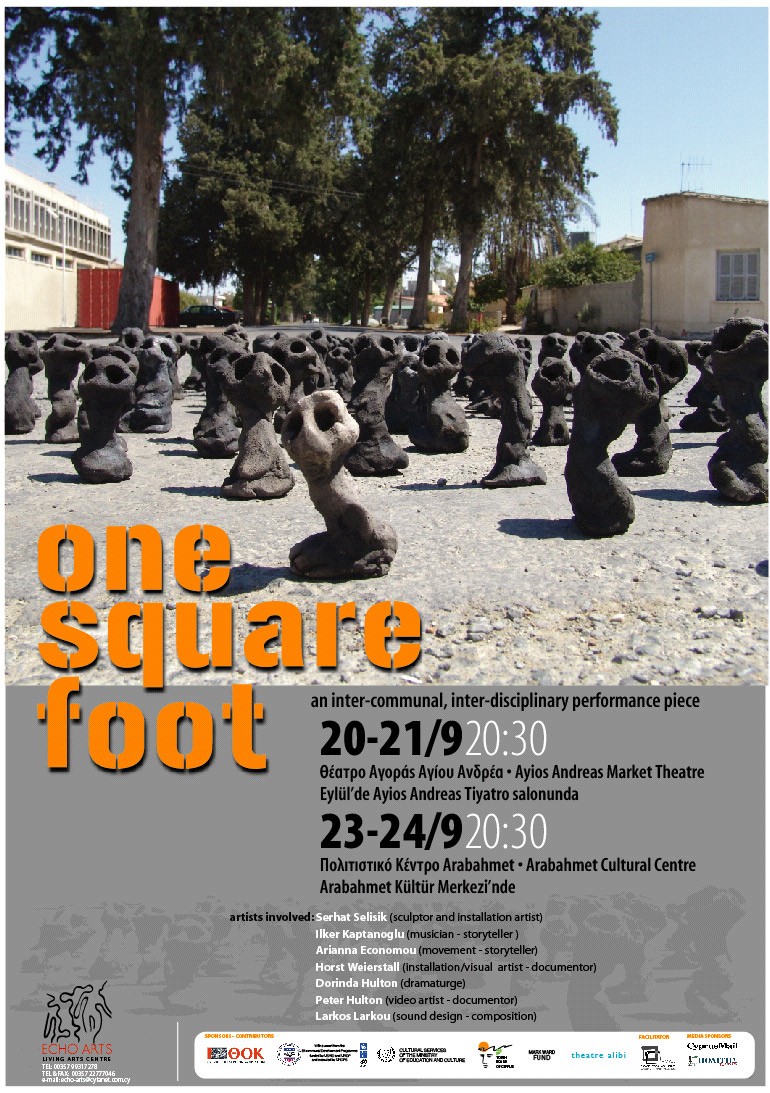
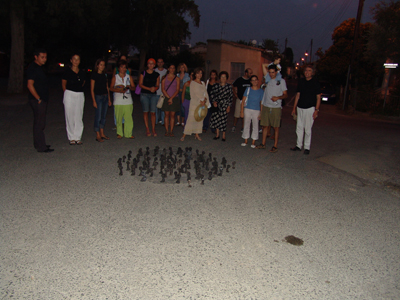
A proposed framework for a ‘new aesthetic’ for creating performance in a conflict zone evolved within a series of practice-as-research investigations led by Hulton and Economou. These investigations were collectively titled THE ONE SQUARE FOOT PROJECT (2003-2008).
This framework for a ‘new aesthetic’ is defined by three principles proposed by Hulton:
- Artistic representation of shared experience and concern rather than subject matter that emphasises differences
- Creative artists from both sidesof a conflict zone, and from different cultures, bringing their individual aesthetics together to explore multi-authored inter-arts processes
- Multilingual form that allows space for the voices of ordinary people from both sides of a divide to be heard on a micro political level.
Performances were experimental in nature and were part of a bi-communal collaborative project whose aims were:
- To contribute to the evolution of peace and reconciliation between the peoples of the whole of Cyprus through engaging creative artists and performers on either side of the military border in a bi-communal, interdisciplinary, project.
- To bring a greater awareness of the personal perspectives of those living on either side of that border, including those in exile.
- To honour the memories of the living and also the memory of those who have died or disappeared.
- To look towards ways of understanding, healing and forgiveness for the sake of the present and the future.
The performances draw on image and metaphor as well as fragments of autobiographical narrative and focuses on the old Cyprus Government Railway which, between 1901 and 1951, ran across the whole island of Cyprus connecting Morfou in the west with Famagusta in the east, as well as many places in between. In Nicosia it both linked and divided the predominantly Turkish and the predominantly Greek communities within the district of Kaimakli, and as part of the research for the performance, the artists have interviewed many Turkish and Greek Cypriots from both sides of the divide (KAIMAKLI and Omorfita ( kucuk Kaimakli)) about their memories of the railway, childhood and living in a mixed community, before the division.
The project was awarded a grant from the AHRB Changing Places scheme (2003) as well as further grants from USAID, UNDP, UNOPS, the Cyprus Theatre Organisation, The Ministry of Education and Culture and The Youth Board of Cyprus, with support from Theatre Alibi, UK, and the School of Performance Arts, Exeter.
Investigative training occurred in the UK (Devon) and in the Cyprus (Troodos mountains and Nicosia’s demilitarised zone) (2003).
Training was applied to create a multi-authored inter-arts performance with cross-border artists, and ‘The Still Small Voice of the People’ (2005) was selected to represent Cyprus at the ‘New Plays from Europe’ International Playwriting Festival, in Wiesbaden, Germany (2006).
Hulton and Economou were invited to present their work to an audience of creative artists and producers linked to the European Off Network at a conference in Vienna: A Third Space: Theatre in Times of War (2008).
Excerpt adapted from
Towards a ‘new aesthetic’ for creating theatre in a conflict zone (2009)
in Theater in times of war, Belgrade: Hop La! More information here
Credits:
sculptor and installation artist: Serhat Selisik
musician- story teller: Ilker Kaptanoglu
movement and storyteller, co director of the project: Arianna Economou
installation and visual artist: Horst Weierstall
dramaturge and co director of the project: Dorinda Hulton
video artist and documentor: Peter Hulton
production of the project: Larkos Larkou (sound design- composition)
Yiangos Hadjiyiannis (performance production)
Organisor: Argyro Toumazou
Facilitator on the north side: EMAA ( European Mediterranean Artists Association)
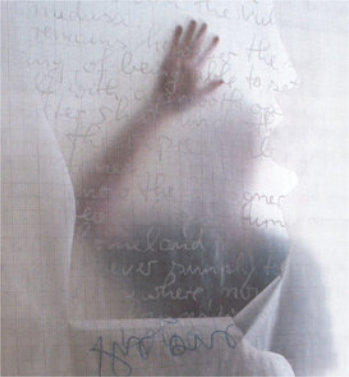
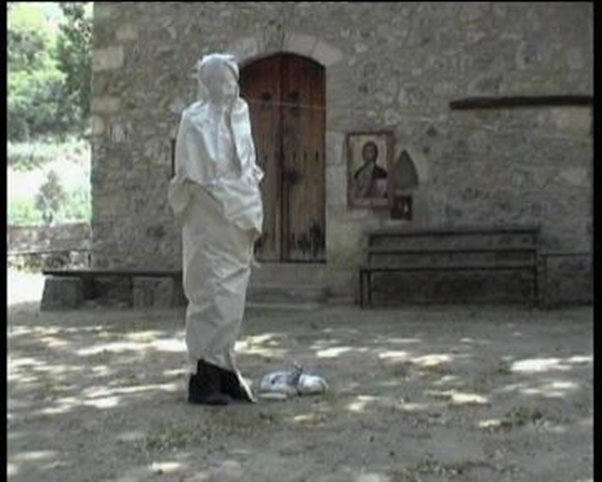
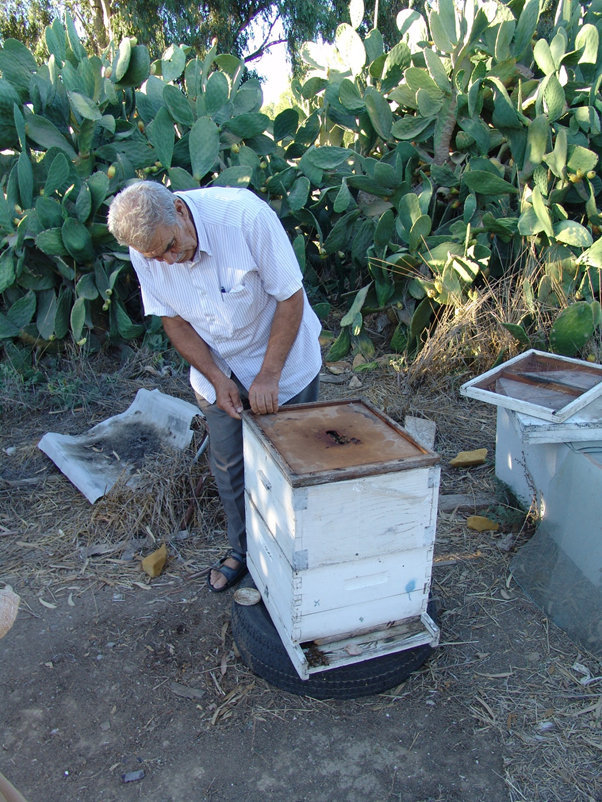
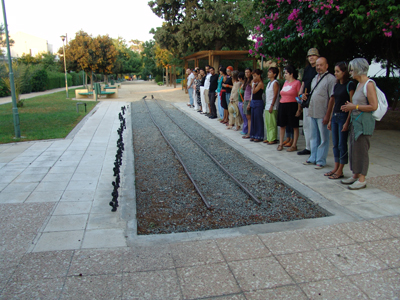
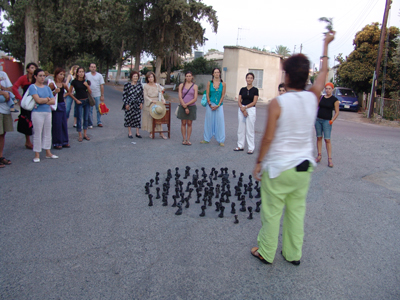
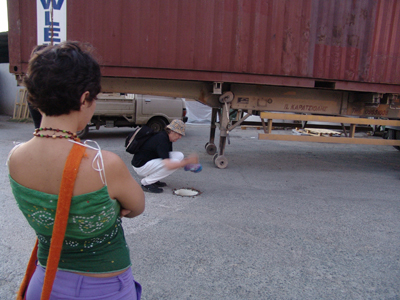
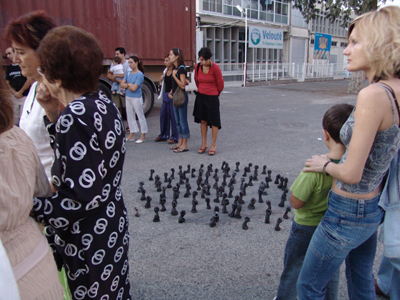
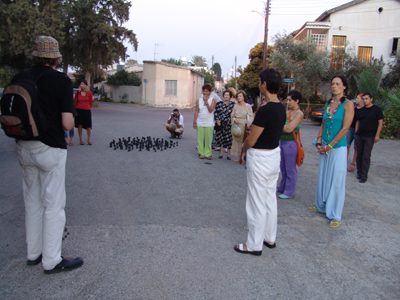
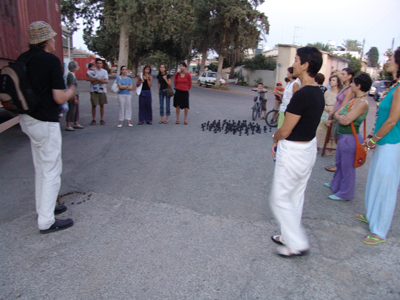
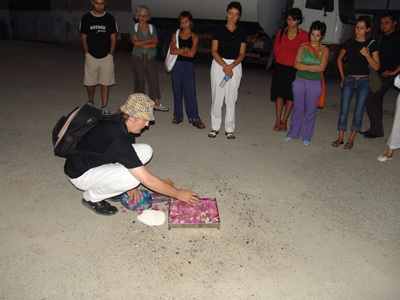
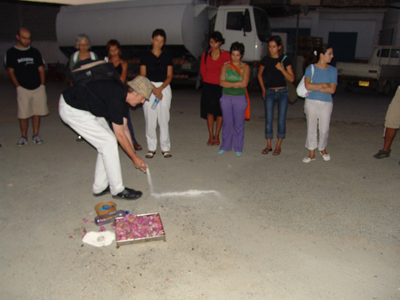
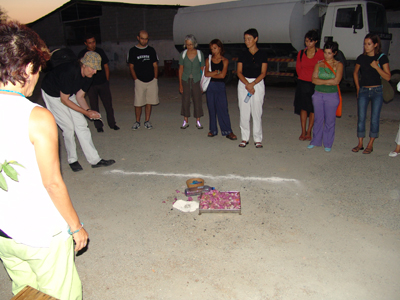
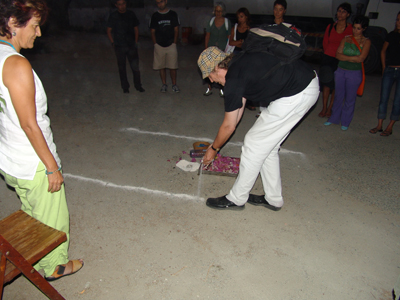
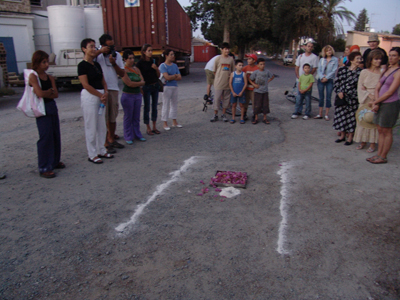
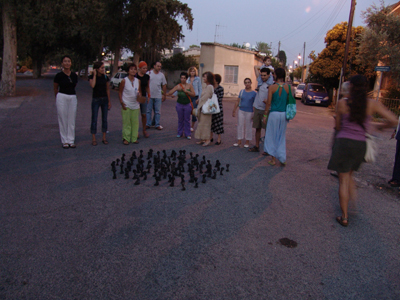
- Dorinda Hulton:
The question of a ‘new aesthetic’ for creating theatre in a conflict zone was raised in September 2008 by Sabin Kock, a Vienna based political lobbyist for fringe artists, and organiser of the conference entitled A Third Space: Theatre in times of war. At the conference, it was addressed through video documentation of contemporary practice by creative artists and producers linked to the European Off Network from Bulgaria, Israel, Palestine, Kosova, Serbia, Turkey and neighbouring countries, and also through discussion. In both these forums it became clear to me that there remains a very real need for space in which to explore the question further – in terms of principles, but more especially in terms of practical processes which may be shared with, and between, international partners. My practice-as-research in Cyprus with Echo-Arts Living Arts Centre (Artistic Director Arianna Economou) aims to contribute to this discussion.
I was invited to be a partner in the Third Space: Theatre in times of War conference because of my work with Economou within a series of projects with creative artists from both sides of the military border in Cyprus since 2003; and, with Economou, I spoke at the conference about a performance entitled The Still Small Voice of the People, selected to represent Cyprus at the ‘New Plays from Europe Festival’ in Wiesbaden Germany, in June 2006.
In a programme note for this performance, Giorgos Neophytou from the Theatre Organisation of Cyprus, offered a summary of the political and historical background to the piece, writing of the “many deep wounds amongst the Greek and the Turkish Cypriots that have been caused by the war, that don’t seem to heal.” He refers here to the war that began on July 20, 1974, when Turkish troops from the mainland invaded the island and occupied 37% of the north. As a result, about 150,000 Turkish Cypriots, under pressure from Ankara, relocated to the north, and since then Cyprus has been ethnically divided: a line now separates the country and its people. This historical and political context is made yet more complex by the numbers of dead and disappeared on both sides, many of whom are still publicly remembered through their faded photographs on trees in city squares, and in posters that line the road to the border.
Throughout the making of the piece, we worked together as a group of artists [2] to find a way of responding to the “many deep wounds” Giorgos Neophytou refers to, and in a situation dominated by the macro politics of the UN, the EU, Greece, Turkey, the UK and the USA, we attempted to do this by creating an artistic forum and structure in which the individual voices of ordinary people might be heard: that is, a structure that might include their stories, their experiences, their memories, beliefs and hopes, rather than those of public institutions. In the following video clip you will hear edited moments from interviews which have been developed into a sound score. The dancer is Arianna Economou, and video artist is Peter Hulton.